


On November 20-21, St. Petersburg hosted the VII BRICS International Municipal Forum, with delegations from 89 constituent entities of the Russian Federation, delegates from 126 countries, and more than 5,000 participants in total.
Special attention was paid to the delegation from India, especially ahead of Russian President Vladimir Putin’s upcoming state visit to the country.
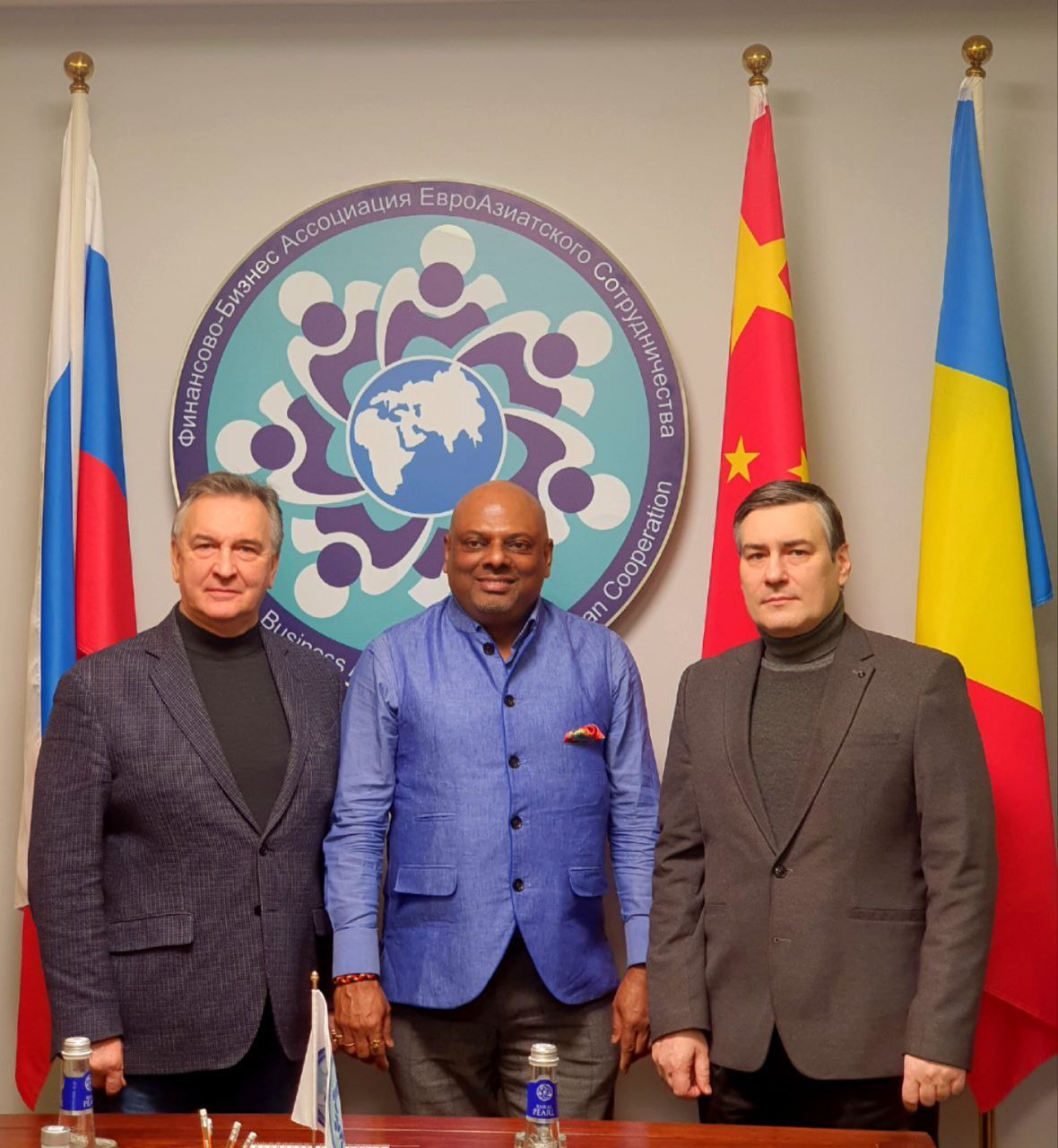
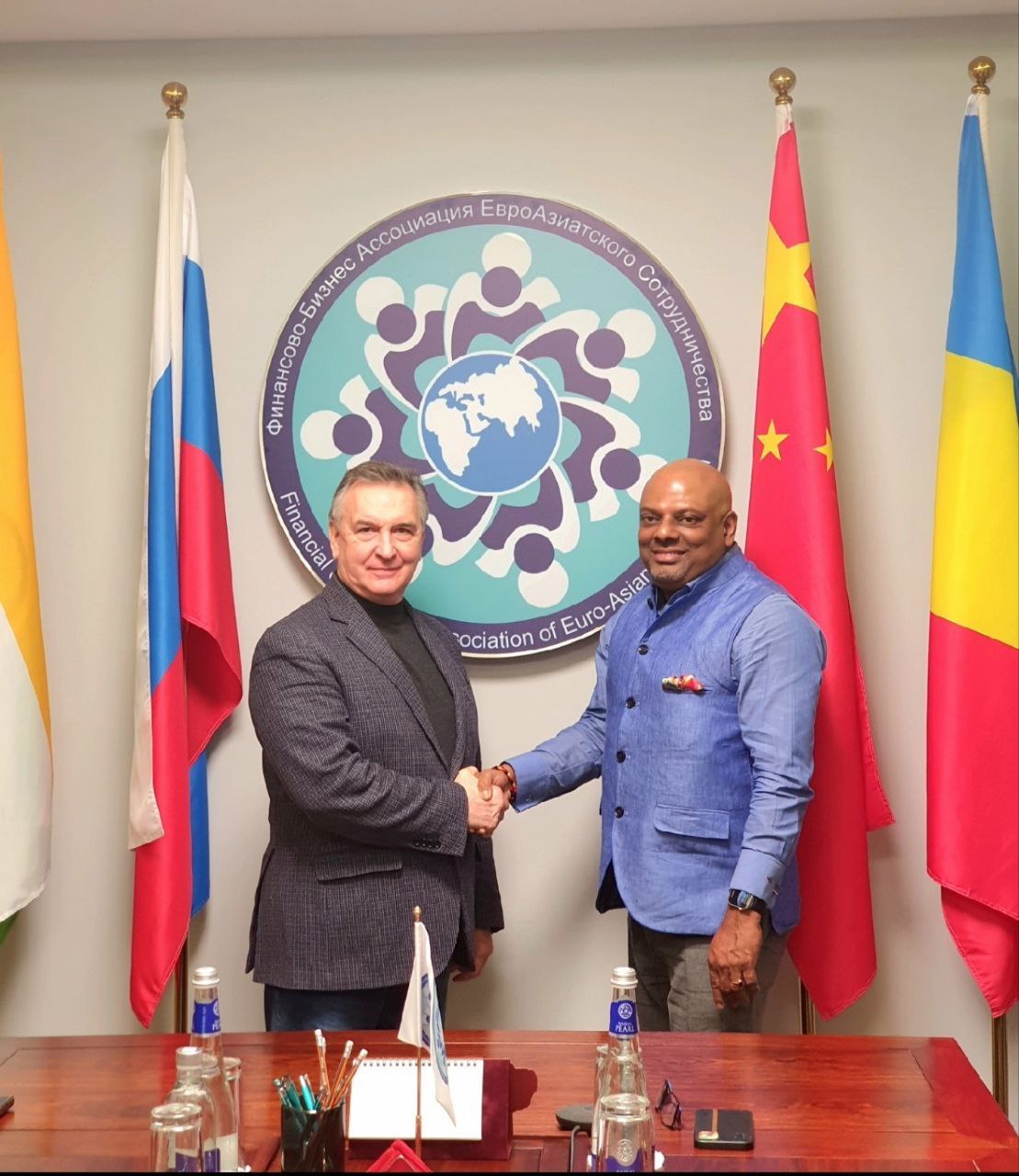
We talked about the development of Russian-Indian cooperation and cooperation between the BRICS countries with the speakers of the session “Providing Qualified personnel to Industrial enterprises and Construction Organizations using welding technologies as an example: Practical tools and Best Practices” by Manish Kumar, Deputy Chairman of the Board of the Financial and Business Association of the Eurasian Economic Union. Cooperation” and Ravil Kamilevich Khusnulin, Director of the RUDN University Innovation and Technology Complex, President of the National Fund for Assistance to the Protection of Strategic Resources.
Tatyana Vladimirovna Zelenchenkova: Dear Mr. Kumar, what is the Indian side preparing for the arrival of Russian President Vladimir Vladimirovich Putin in India?
Our people have been waiting for this moment for probably three years, because we are all aware that from the moment when the International Court of Justice decided to arrest, the President of the Russian Federation very carefully chooses which country to go to.
And this already confirms his trust in our Indian people, since he decided to fly to India. One and a half billion people are waiting for this event. The people are preparing very carefully for the arrival. Just last week, the Indian Foreign Minister flew to Moscow and met with Lavrov and Manturov. He was informed about the preparations for the President’s trip to India. We have several relevant topics that will definitely be discussed, of which, of course, the supply of oil is a priority.
From the West, sanctions on India are putting a lot of pressure on us to reduce the purchase of oil.
The second very important issue in the workforce, which I mentioned earlier, is that we are ready to address this issue. And I am now included in the delegation that will take part in the summit.
And I will be speaking at one of the sessions where the possibility of providing workers from India to Russia will be explored. This is a very relevant issue in the future. Of course, there is also scientific cooperation, cultural cooperation, industrialization, technology transfer, and defense cooperation, which has already become traditional.
We prepare very carefully.

Tatyana Vladimirovna Zelenchenkova: Ravil Kamilievich, your speech at the BRICS International Municipal Forum on the establishment of the BRICS International Welding Institute has attracted broad support from many countries. Who in Russia supported this initiative?
The creation of the International Welding Institute of the BRICS countries is aimed at implementing a number of urgent tasks both for manufacturers of welding equipment and for all structures related to this field of activity, dealing with welding control and diagnostics, certification of equipment and specialists, etc. etc.
In Russia, the project is being implemented jointly with the National Welding Control Association, relevant Russian universities, the International Congress of Industrialists and Entrepreneurs, with the support of the Academy of Sciences of the Russian Federation, the State Duma and the Federation Council of the Federal Assembly of the Russian Federation.
The BRICS International Welding Institute will be registered as a non-profit organization in the Russian jurisdiction.
Zelenchenkova Tatiana Vladimirovna: Mr. Kumar, what do you see as an obstacle to the rapid cooperation of our two countries in the implementation of this program?
See how Ravil Kamilevich has already explained the prospects, there are huge opportunities. The industry needs Indian workers now, and the employer needs them. But there are obstacles such that the Russian labor market was not known to Indian workers, they worked mainly in Europe and the United Arab Emirates.
There are difficulties such as new territories, a language barrier, a weather barrier, you know, we don’t know where they will work in Russia, maybe in difficult climatic conditions, a difficult cultural atmosphere. Therefore, there are several employers we are talking to, and they are already planning to hire Indian workers and create a separate infrastructure for them, separate dormitories, a separate cultural center, and a separate kitchen so that they feel comfortable.
And our program will give you the opportunity to adapt to work in Russia, to prepare not only technically, but also in knowledge of the Russian language and the traditions of perception of Russia, so people will come and are already psychologically prepared.
Zelenchenkova Tatiana Vladimirovna: Ravil Kamilievich, how do other BRICS countries plan to participate in the creation and operation of the BRICS International Welding Institute?
Yes, we organized a separate panel session at the BRICS International Municipal Forum, where we discussed personnel training issues. And our colleagues who deal with the issue of hiring foreign personnel reacted very carefully to this and noted that the need for personnel, specifically in terms of welding, is very high. The Russian educational system cannot cope with the needs of today, and therefore, of course, we need highly qualified personnel from abroad. The issue of personnel training in India was discussed separately.
And Mr. Manish Kumar and I are starting this program to train welders in India with further employment in the Russian Federation. Those colleagues who were present definitely supported this, although it is clear that there is some competition, because the People’s Republic of China supplies quite a lot of specialists. There are also Southeast Asian countries, in particular Bangladesh and Vietnam, but we believe that the 1.5 billion Indian contingent is, of course, much more preferable, because there are already statistics showing the level of training of specialists from India.
There are good and highly qualified specialists there, but we have agreed that in order for our colleagues to work here in the Russian Federation, they will be trained according to our program, using Russian equipment, and take a qualification exam according to the requirements of the Russian Federation and the requirements of our employers. And in Russia, they will work on Russian equipment, on the one they were trained on, which will give certain advantages compared to other countries, because the requirements in Russia now are that the equipment should be Russian with Russian software. Therefore, I believe that there are great prospects and a real need in this area, which we have started.
We have statistics. These are not hundreds, but thousands of specialists who are needed in Russia in manufacturing, construction, and social facilities. Therefore, we believe that we can safely replace this and fulfill these requests, these needs. Moreover, we understand that there are needs not only for welders.
We have partnerships with a number of companies that need highly qualified seamstresses from India, this is their topic, there are specialists in the field of energy, we need qualified electricians, high-tech specialists. Therefore, I believe that our Indian partners will be of great help to Russia’s industrial production.
The VII BRICS International Municipal Forum has shown great interest in various issues of the BRICS countries’ activities, including the creation of the BRICS International Welding Institute. We invite partners not only from industry, science and education, but also from finance, which will allow us to realize all the potential inherent in relation to the specifics of each of the BRICS countries.


