

Scientists of the Kurchatov Institute have created a superglue for medical purposes based on mussel leg proteins. Today, scientists from different countries are working on the creation of biocompatible medical materials capable of gluing biological tissues in a moist environment of the body, including in the bloodstream.
A few years ago, in the laboratory of protein engineering of the Kurchatov Institute — GosNIIgenetics synthesized an analogue of proteins-spidroins used by circle-spinning spiders to create a web frame thread.
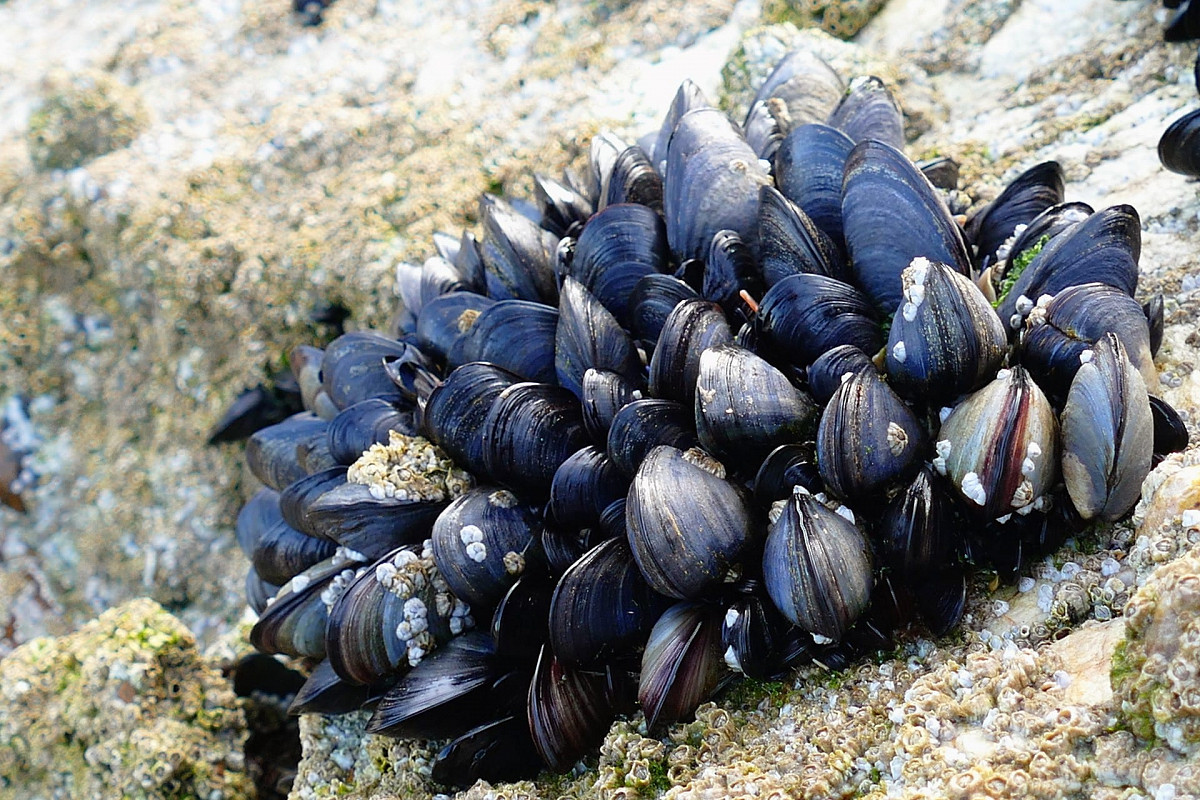
The unique material — “artificial web” — has great strength and lightness, as well as high regenerative properties. Developers have already obtained various supramolecular forms based on speedroins: films, three-dimensional scaffolds (frameworks for the formation of different types of tissues), hydrogels, microgels, tubes. Research to improve the properties of speedroins continues. So, scientists have long paid attention to the properties of mussel leg proteins. These mollusks secrete special substances that allow them to adhere to any surfaces in their habitat.
“Mussels produce the enzyme tyrosinase, which promotes the bonding of proteins. We created the same enzyme in the laboratory and treated our previously created spidroins with it. It turned out that they become more sticky and, most importantly, retain the properties of bonding in a humid environment,” said Vladimir Bogush, a leading researcher at the Laboratory of protein Engineering at the Kurchatov Institute Research Center.
Experiments conducted by researchers have shown high bonding strength of tendons, skin and bones of animals, as well as PVC plastic, glass, metal, polylactide, wood. The protein glue obtained by our scientists has the highest bonding strength in the world among protein biocompatible adhesives.
First of all, such glue is necessary in medicine, for example, for tendon injuries or bone fractures. According to V. Bogush, in the humid environment of the human body, such glue is able to work in many tissues: it can glue muscles, bones, help even in the case of complex wounds, when it is necessary to collect bone shattered into fragments. In particular, it is a godsend for maxillofacial surgery: doctors will have the possibility of surgery to glue the bones of the jaw.
One of the main advantages of medical superglue is its complete biocompatibility and safety. In addition, it completely decomposes to amino acids, being replaced at the same time by newly formed own tissues of the body.
Research continues: now the composition of the glue is being improved in the laboratory. As a result of further research, other adhesives can be developed that work in a humid environment of the body and are suitable for connecting human tissues, coating medical devices, as well as as a depot for drug delivery.