


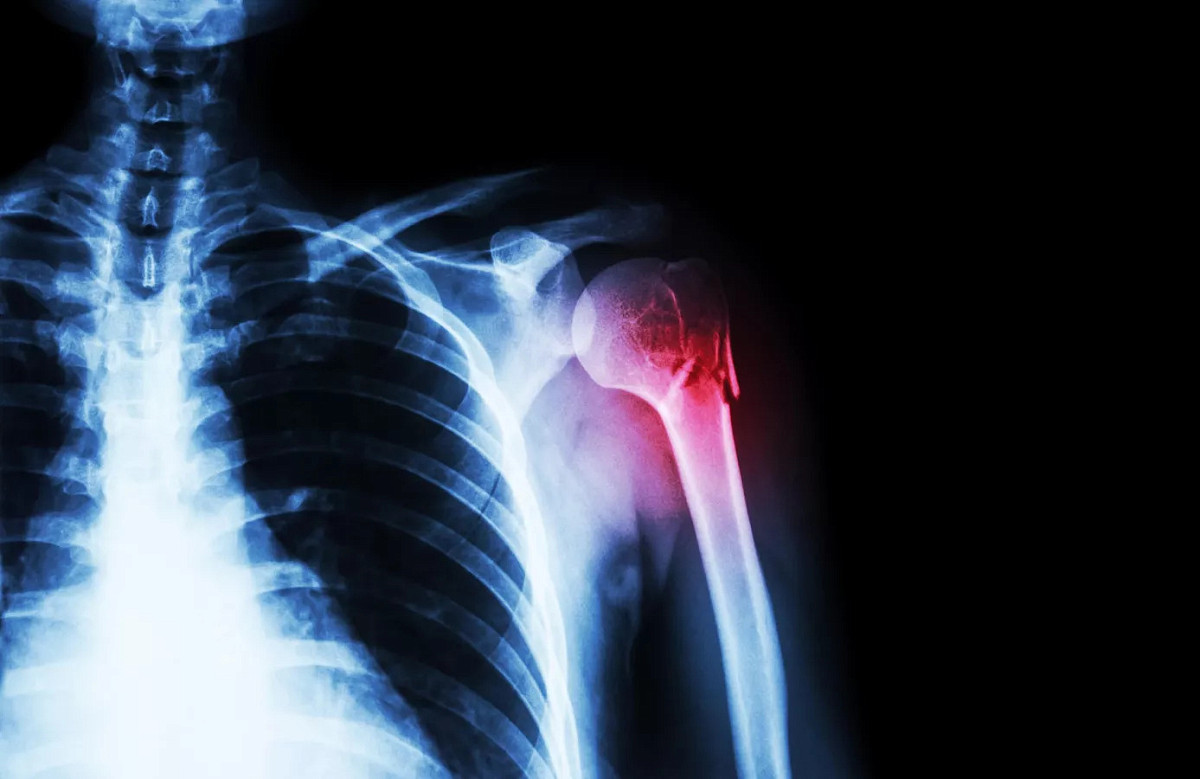
The possibility of practical use of bone implants made of domestic biodegradable polymer has been experimentally demonstrated by SFU scientists. According to them, the use of the development will allow in the future to help in the treatment and improve the quality of life of people with injuries, osteoporosis, congenital orthopedic defects. The results are published in the International Journal of Molecular Sciences.Today 3D printing is one of the most promising technologies in reconstructive medicine. It allows you to obtain individual medical devices, including for tissue engineering. The success of the development of medical 3D printing is largely determined by the development of new materials with the necessary properties that ensure the creation of bioimplants with a set of necessary characteristics.
Scientists of the Siberian Federal University (SIBFU) are working on the creation of biodegradable polymer materials for three-dimensional printing of fabric matrices. Such products are needed for structural remodeling of bone tissue when the body’s own resource is insufficient and it is necessary to fill the defect volume using implants.
In the course of the study, the specialists were able to confirm in vivo (in an animal experiment) the effectiveness of using 3D products from the biodegradable polymer material synthesized by them to fill bone cavities.«
“A significant result is the confirmation of our hypothesis about the possibility of using 3D printing technology FDM of strong highly porous structures of complex shape and various sizes from domestic polyhydroxyalkanoates of microbiological origin for bone restoration,” said Ekaterina Shishatskaya, Head of the Department of Medical Biology at the Institute of Fundamental Biology and Biotechnology of SibFU, Professor, Doctor of Biological Sciences.
She added that these materials are synthesized in Krasnoyarsk using the author’s patented technology. According to the developers, for the first time in Russia they implemented the technology of obtaining a cartridge for a 3D printer from biodegradable thermoplastics and also implemented all stages of the study, including an implantation experiment. The work took several years, the animal experiment lasted about six months. X-ray and histological analysis confirmed the formation of healthy bone tissue and complete restoration of the defect after 150 days of observation, the scientists reported.
“It is phenomenally simple and accessible in any city of our country – to make a tomogram, calculate the volume and dimensions of the bone defect and print an implant from our polymer. The technique of FDM printing is now taught to a large number of young people at universities and even schools. Of course, where work with the patient begins, everything is more complicated – the qualification of an orthopedic doctor should be very high: such treatment requires a complex open operation with dissection and connection of a large volume of tissues, postoperative rehabilitation will be required,” said Konstantin Kistersky, assistant of the Department of Medical Biology at SibFU.The advantage of the development is that there is no need to use a donor bone or the patient’s own bone – this polymer material perfectly performs its functions. “In addition, the development will make it possible to expand indications for orthopedic corrections, since the issue of volume restrictions for implants is removed – we have a lot of polymer, and we can print products of sufficiently large sizes,” Shishatskaya added.
Chromatography, thermogravimetric analysis and differential scanning calorimetry, X–ray spectroscopy, studies of mechanical characteristics – modulus of elasticity and tensile strength, as well as fluorescence and scanning electron microscopy were used to analyze and control the characteristics of products. The products were also tested in experiments with cell culture.
At this stage, scientists are faced with the task of repeating the experiment with the complication of the type of bone defect, then a transition to clinical trials is possible.
The work was carried out at the expense of the state task of the Ministry of Science and Higher Education of the Russian Federation (project No. 0287-2021-0025).
The research is carried out within the framework of the university’s development strategy under the “Priority-2030” program
A source: https://e-cis.info/news/569/112339/


