


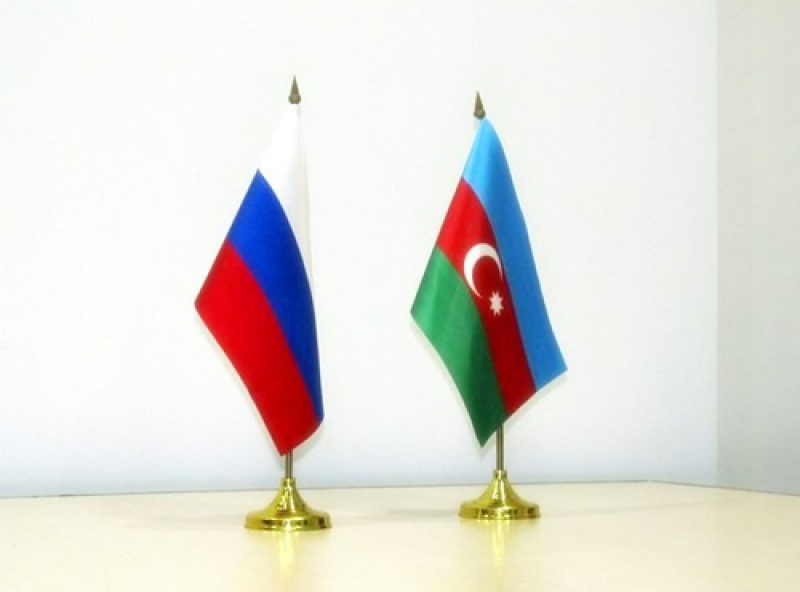
On November 27, 2023, the fourth meeting of the Russian-Azerbaijani Expert Council (RAEC) was held in Moscow on the topic “Interaction between Russia and Azerbaijan in post-conflict development in the South Caucasus”, organized jointly by the Russian Council for International Affairs (RIAC) and the Center for Analysis of International Relations (CAMO) of Azerbaijan. RAES meetings are held in a regular annual format.
Speaking at the plenary session, Mikhail Kalugin, Deputy Director of the Fourth CIS Department of the Russian Foreign Ministry, and Elshad Iskenderov, Ambassador-at-Large of the Azerbaijani Foreign Ministry, noted the positive dynamics of the development of bilateral relations between Moscow and Baku, which gained a new impetus with the end of the Karabakh conflict, as well as the high level of trust and pragmatism that characterizes them. The Scientific director of the RIAC, Andrey Kortunov, and the Chairman of the Board of the CAMO, Farid Shafiev, stressed that the format of the RAES created in 2021 and the holding of four meetings indicates the relevance and timeliness of this project. The need was noted for further development of direct contacts between experts from Russia and Azerbaijan aimed at both deepening the allied relations of the two countries as a whole and at a clearer understanding of approaches to issues on each other’s global and regional agenda, which seems especially relevant during the post-conflict development in the South Caucasus region.
During the meeting of the Council, which continued in the format of the main session and panel discussion, the RAES participants — leading representatives of Russian and Azerbaijani expert centers made the following meaningful observations:
- The basis of bilateral relations between Moscow and Baku at the present stage is the Declaration on Allied Cooperation between the Russian Federation and the Republic of Azerbaijan, signed in Moscow on February 22, 2022 by Presidents V.V. Putin and I.G. Aliyev. The Declaration defines the main contours of allied cooperation between the parties based on mutual respect for each other’s interests, cultures and traditions, creating opportunities for further deepening, expanding and diversifying cooperation in various fields.
- Historical, tectonic changes are taking place in the South Caucasus today, which must be objectively and impartially assessed. A window of opportunity opens for normalizing the situation in the region and solving long-standing accumulated problems. At the same time, there remains a high risk of destructive interference of non-regional players in the processes taking place in the South Caucasus.
- Relations between Russia and Azerbaijan are distinguished by a high degree of pragmatism, when states, even in the presence of certain contradictions on a number of issues on the regional agenda, manage to maintain a constructive nature of relations. With the final resolution of the Karabakh conflict and the restoration of the territorial integrity of Azerbaijan, such disagreements between Moscow and Baku become even less.
- After the final settlement of the Karabakh conflict and the restoration of the territorial integrity of Azerbaijan, experts consider the work on the creation of transport corridors and regional transport infrastructure to be one of the factors contributing to the normalization of Armenian-Azerbaijani relations. The key driver of cooperation is the creation of new and modernization of old transport arteries. Cooperation within the framework of the North–South ITC is of great importance in this regard. Nowadays, issues related to the North-South ITC project are increasingly becoming a topic of discussion at various regional venues. This topic is becoming more relevant, including in connection with Russia’s initiative to finance the missing branch line between Azerbaijan and Iran ($1.5 billion).
- The “3+3” format is currently a promising negotiating platform in the South Caucasus region. The mechanism of cooperation proposed by Turkey and Azerbaijan after the second Karabakh war in 2020 and supported by Russia is becoming increasingly in demand in the context of post-conflict development in the region. The second meeting (and the first after the end of the Karabakh conflict) within the framework of the format took place on October 23 this year in Tehran. This format is given special attention in the foreign ministries of Russia and Azerbaijan. Within the framework of the format, it would be useful to pay more attention to such topics as destructive interference of non-regional players in the internal affairs of the South Caucasus and methods of countering such policies, multilateral cooperation of states in the Caspian Sea region, as well as prospects for the peace process between Azerbaijan and Armenia.
- The role of regional players in the South Caucasus – Russia, Turkey, Iran – is extremely important. This triangle is the most promising from the point of view of multilateral cooperation to establish and maintain lasting peace and stability in the region.
- Russian experts pointed out that Russia continues to adhere to an equidistant and unbiased line in relations with regional states, despite the difficulties in relations with Armenia, which are an important part of the domestic political agenda in Yerevan. Moscow is fully ready to contribute to the further normalization of relations between Armenia and Azerbaijan.
- The Council members expressed their readiness to contribute to the further development of bilateral humanitarian and cultural ties. In particular, they talked about more active activities in organizing various expert round tables with the participation of Russian and Azerbaijani experts and discussing key points of bilateral cooperation. In this regard, the usefulness of more frequent interim consultations or round tables with the participation of Council members in the period between official meetings was also noted.
- The expediency of providing the recommendations of the Council meeting to the relevant platforms of bilateral cooperation; publishing joint thematic collections; expert coverage of key political events in Russia and Azerbaijan (constructive comments from experts, articles on the website of organizations and mass media, briefings, interviews) was noted, and commitment to the previously adopted decision to hold Council meetings on a regular basis was emphasized.
- Work plans for the next year were discussed, including the preparation of a joint publication on cooperation between Russia and Azerbaijan in the framework of multilateral projects and its presentation at the next, fifth meeting of the RAEC. Priority topics of mutual interest are cooperation between Moscow and Baku in the Caspian Sea region, as well as within the framework of the North-South ITC project.


