

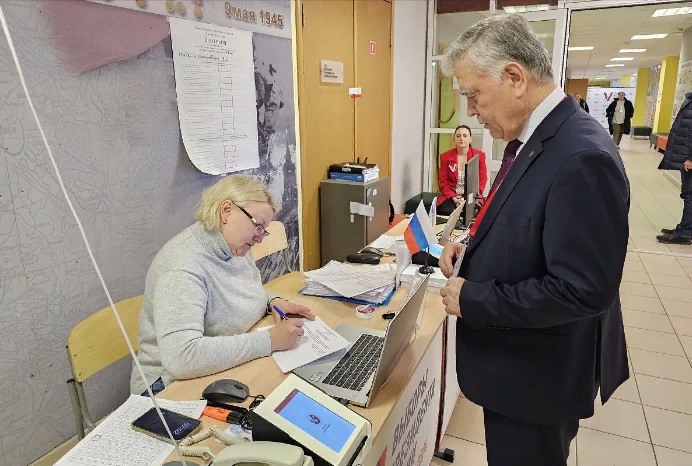
March 17, 2024 is the final day of the three–day voting in the presidential elections of the Russian Federation. As part of the monitoring of the electoral process, the Head of the CIS Observer Mission, Deputy Secretary General of the CIS, Ilham Nematov, visited a number of polling stations in Moscow.

Arriving at the opening of site No. 2852, the Head of the Mission inspected its equipment and facilities, noting the existence of special conditions for the expression of the will of citizens with disabilities. During the conversation with the chairman and members of the precinct election commission, the voting process and voter activity were discussed, the number of citizens who voted outside the polling station was clarified, as well as the possible presence of complaints from voters.
Communicating with representatives of public monitoring at the polling station, Ilkhom Nematov asked whether any deviations from standard voting procedures had been identified or possible incidents with voters had been recorded. As observers reported, they did not identify any significant shortcomings in the framework of election monitoring.
At the next polling station No. 2885, the Head of the Mission, in addition to the usual questions, studied in more detail the work with electronic voter lists, stationary and portable electronic voting terminals. He also drew attention to the functioning of the video surveillance system, found out how the uninterrupted transmission of the video signal is controlled.
The feedback received by Ilham Nematov from public observers, members of election commissions and voters themselves on the advantages of innovations introduced into the electoral process, primarily such as three-day voting and remote electronic voting (DEG), is of interest. These innovations were widely approved, and all interested parties expressed their support for their application in the next election campaigns.
Many voters emphasized the convenience of holding elections within three days, since in this case it is easier for citizens to plan their visits to polling stations taking into account their personal plans for the weekend. According to the opinions expressed, both this innovation and the DEG make it possible to ensure wider participation of people in voting and, accordingly, a higher turnout at the elections.
At polling station No. 2859, the Head of the Mission met with foreign observers from Vietnam and Laos, who highly appreciated the organization of the electoral process. According to them, many positive aspects in the Russian electoral legislation can be used in their countries.
In a few hours, Ilkhom Nematov visited 7 polling stations. This allowed him to form a fairly complete impression of the voting process in the Russian capital on the final day of the elections. Together with the data received from international observers working at many other sites in Moscow, the results obtained will be comprehensively analyzed and taken into account when preparing the final Statement.
During communication with media representatives at the site No. 2559, the Head of the Mission noted: “All sites are equipped with the necessary technical means, there are relevant information materials everywhere. The members of the commissions are trained, experienced and well versed in electoral law. Observers from the federal and Moscow public chambers and political parties are working everywhere.” He also pointed out that the voting process is proceeding calmly, in an organized manner, without any deviations from the requirements of the legislation.
At the moment, the CIS Observer Mission has not recorded any violations that could affect the election results. The collection of information from representatives of the Commonwealth member States conducting surveillance in almost one third of the regions of the Russian Federation continues. “The amount of data is significant, but we strive to process it as quickly as possible,– said Ilkhom Nematov. “In general, we see that all the necessary conditions for the free expression of the will of citizens have been created.”